
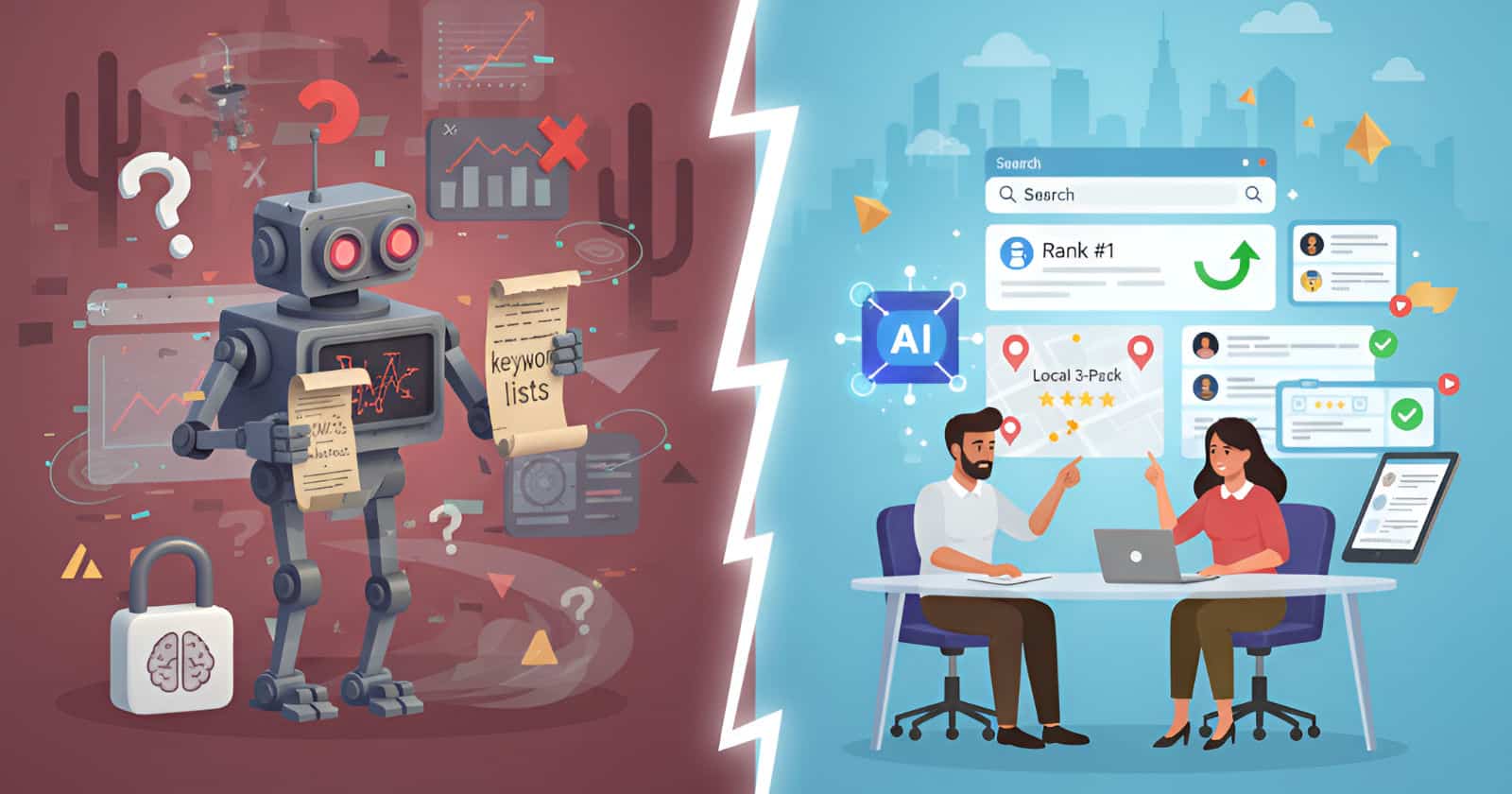
Below is an updated myth-versus-reality guide to AI in digital marketing, using insights current to 2025. Each section groups AI myths by category so you can use this as a reference for web, PDF, or presentation formats. It incorporates verified themes found across professional digital marketing, SEO, advertising, and content development sources.
SEO and Content Strategy (AI + Search)
Myth 1: AI-generated content doesn’t rank on Google.
Reality: Google ranks content based on usefulness and reliability, not authorship method. Human-edited AI content with strong expertise, citations, and accuracy can perform extremely well.
Myth 2: AI search engines make SEO irrelevant.
Reality: SEO has evolved, not disappeared. Optimizing structured data, factual clarity, and readability now supports AI-driven content summaries in search results.
Myth 3: AI can handle the entire SEO process on its own.
Reality: AI automates audits, keyword clustering, and technical optimizations, but strategy and adaptation still require human expertise.
Myth 4: Search engines prefer only human-written content.
Reality: Well-reviewed hybrid workflows—AI-drafted, human-edited—actually help achieve content consistency and depth at scale.
Myth 5: AI-generated articles always sound robotic and unoriginal.
Reality: With proper prompt engineering and editing, AI-generated content can sound authentic, brand-aligned, and tailored to audience intent.
Myth 6: You can “game” AI search algorithms with keyword stuffing.
Reality: AI lookups analyze semantic relevance, authority, and user satisfaction, making old-school keyword manipulation ineffective.
Website Design and Development
Myth 7: AI website builders can replace human designers.
Reality: AI generates layouts quickly, but lacks creativity, accessibility comprehension, and emotional UX logic only humans can supply.
Myth 8: AI websites are automatically bad for SEO.
Reality: AI builders can enhance SEO by automating metadata, sitemaps, and structured layout—if the human configures them right.
Myth 9: Developers will soon stop coding because AI will write it all.
Reality: AI speeds up debugging and code suggestion, but scalable, secure software still demands human problem-solving and testing.
Myth 10: AI web design tools replace UX research.
Reality: AI offers data-driven insights, but human researchers interpret emotional patterns, accessibility, and brand feel that data alone misses.
Social Media and Community Engagement
Myth 11: AI-generated posts are penalized by social platforms.
Reality: Major platforms favor engagement quality, not authorship. AI-created posts that follow platform standards perform equally well.
Myth 12: AI can autonomously manage brand voice online.
Reality: Brand tone consistency requires human direction—AI mimics past content but lacks brand storytelling intuition.
Myth 13: AI creativity equals human creativity.
Reality: AI recombines patterns; humans innovate through emotion and cultural awareness. Both paired together drive the best campaigns.
Myth 14: Using AI for posts will make brands sound robotic.
Reality: Proper editing and fact-checking avoid that. Tone calibration tools keep AI posts conversational and on-brand.
Advertising and Campaign Management
Myth 15: AI can fully run ad campaigns without oversight.
Reality: Automation helps manage bidding, segmentation, and testing, but human intuition ensures authenticity, timing, and compliance.
Myth 16: AI makes all advertising cheaper and faster.
Reality: Inefficient prompts, missing data, or poor integrations can drain budgets faster. Oversight saves money.
Myth 17: AI-generated ads always outperform human creatives.
Reality: They optimize faster but still need human copywriters to connect emotional triggers with brand values.
Myth 18: AI campaigns are completely unbiased.
Reality: Algorithms reflect the data used to train them—marketing teams must audit outputs for bias and representation accuracy.
Myth 19: Plug-and-play AI ad tools guarantee ROI.
Reality: Tools accelerate production but need expert setup, experiment cycles, and audience calibration to yield consistent ROI.
Myth 20: AI will replace advertisers entirely.
Reality: The role is shifting from manual optimization to creative direction and AI strategy supervision.
Video Production, Storytelling, and Creative Workflows
Myth 21: AI can replace video producers and editors.
Reality: AI enhances pre-production (scripts, captions, shot lists), but final pacing, visual storytelling, and emotional tone still depend on human hands.
Myth 22: AI-generated videos can’t look cinematic.
Reality: AI tools now enable ultra-realistic visuals, provided humans set parameters, lighting cues, and review rendering quality.
Myth 23: AI will take over post-production completely.
Reality: Automation saves time in trimming, color correction, and tagging, but creative sequences and mood shaping remain human-led.
Myth 24: AI can create entire video campaigns alone.
Reality: Many brands discovered that pure-AI output lacks authenticity; blending AI drafts with human editing produces stronger stories.
Strategy, Analytics, and Ethics
Myth 25: AI can build digital marketing strategy without human direction.
Reality: AI spots trends but doesn’t interpret culture, ethics, or emotional timing crucial to successful strategy.
Myth 26: AI can personalize experiences perfectly on its own.
Reality: Data quality limits personalization accuracy; humans curate the empathy layer AI lacks.
Myth 27: AI is fully objective in decision-making.
Reality: Bias persists in datasets and model training. Continuous review ensures equitable and realistic outputs.
Myth 28: AI privacy and data compliance are automatic.
Reality: Humans must oversee consent, legal frameworks (GDPR/CCPA), and transparency around AI use.
Myth 29: Fully autonomous AI marketing is already possible.
Reality: Effective systems still rely on human supervision for creative control and quality assurance.
Myth 30: Consumers don’t care if content was created by AI.
Reality: Surveys show users value disclosure; transparent brands build trust faster in AI-driven environments.
Key Takeaways
- AI has revolutionized every area of digital marketing—but it’s not replacing human roles, it’s redefining them.
- Effective marketers integrate AI as a strategic teammate, using it to scale insights, speed up execution, and enhance creativity.
- The future belongs to businesses that master the partnership between algorithm and empathy.